
Fire and Smoke Detection
Early fire and smoke detection using the cameras already covering your floor, flagging a plume at the source instead of waiting for it to reach a ceiling sensor.
See the Demo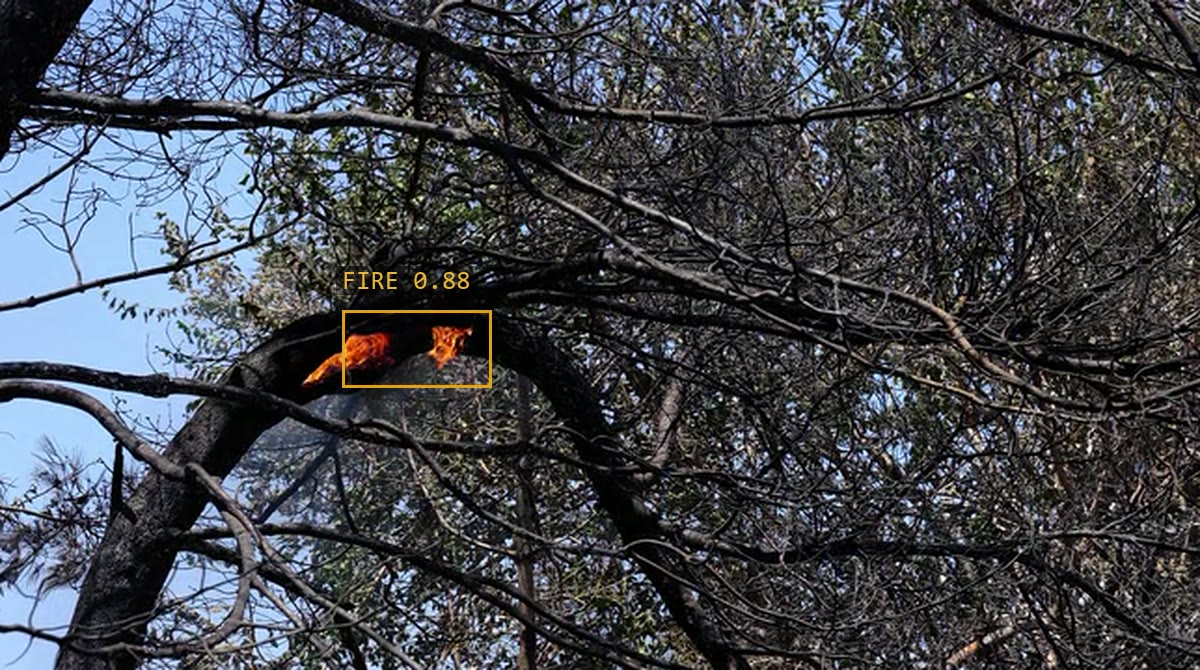
What it does
Why cameras beat ceiling sensors on time
A point sensor in the ceiling has to wait for smoke to physically travel to it. In a high bay warehouse or an open plant floor, that can take minutes, and in a space with strong airflow it may never trigger at all. A camera already looking at the area sees the first visible smoke at the source, which is where the time is won.
What the model looks for
Trinocular AI detects visible flame and rising smoke plumes in the live stream, with the location narrowed to the zone and the aisle rather than just the building. Detections carry a confidence score and an evidence clip, so a supervisor can confirm in seconds rather than walking the floor to check.
Routing it to the right people
Alerts go to the floor supervisor and site safety with the clip attached, and can be escalated into evacuation procedures and emergency service notification where your policy calls for it. Because the detection carries a zone, the alert can also name the nearest exit route.
Honest limits
Detection needs line of sight. Fire starting inside a closed cabinet, behind racking, or outside the camera's field of view will not be seen until it becomes visible. Heavy steam, welding flash and some industrial processes can resemble smoke, which is why thresholds and exclusion zones are tuned per site. This complements fire detection and suppression systems, it does not replace them or any obligation you have to fit them.
At a glance
- Detects
- Visible flame and smoke plumes
- Input
- Existing floor and perimeter cameras
- Output
- Zone, aisle and nearest exit route
- Deployment
- Edge, on-premise, cloud or hybrid
- Detect Flame at the source, before it spreads
- Locate Zone, camera and distance to the boundary
- Alert Site safety and the fire marshal, with the clip
- Escalate Evacuation and emergency services routing
Works on the cameras already covering the site, with no additional sensors. How early a flame is caught depends on line of sight, lighting, and how much of it the camera can resolve at that distance.
Questions
Does this replace our fire alarm system?
No, and it should not be sold as one. It is an early detection layer that runs alongside your existing alarms and suppression, giving your team notice sooner. Statutory fire detection obligations are unaffected.
Will welding or steam set it off?
They can, which is why sites with those processes get exclusion zones and tuned thresholds during deployment. The system is calibrated against your own footage, including the processes that normally run, before it goes live.
How quickly does it detect?
Detection fires on the first frames in which smoke or flame is visible to the camera, and the alert follows sub-second. The real saving against a ceiling sensor is the travel time smoke no longer has to make.
Most often deployed in
See it on your own cameras
Bring your existing CCTV. We will assess what your angles can actually support and show you the detections running on your own footage.